
From Mbaise to Boston: Our Roots and Journey
The Land of Mbaise
Our organisation’s heritage begins in the historic region of Mbaise in Imo State, southeastern Nigeria. According to historical and ethnographic studies, the name “Mbaise” was first adopted in 1941 to denote a federated grouping of five clan-units—Agbaja, Ahiara, Ekwerazu, Ezinihitte and Oke Uvuru—under colonial administration.
Though diverse in ancestry and dialect, these communities over time developed a shared identity and culture centred on Igbo customs, language, and communal life.
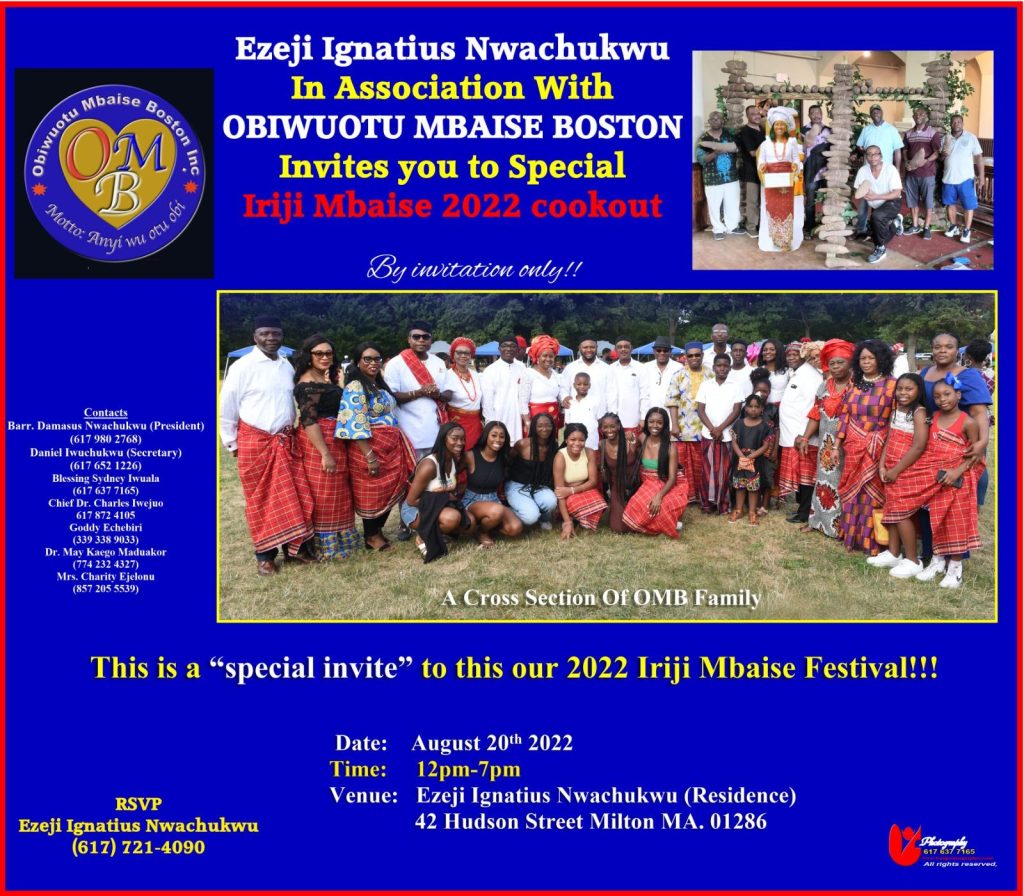
The region has been known for its strong traditions, high levels of educational achievement, and vibrant cultural expressions such as the “New Yam” festival (Iri Ji).
Migration and Diaspora
As with many who leave Nigeria for opportunity abroad—whether for education, profession or family reasons—sons and daughters of Mbaise settled around the world, including in the United States. They brought with them not only skills and ambition but also a deep longing to preserve their heritage, sustain their communal bonds, and serve both their local diasporic community and their home region.
The Founding of Obiwuotu Mbaise, Boston
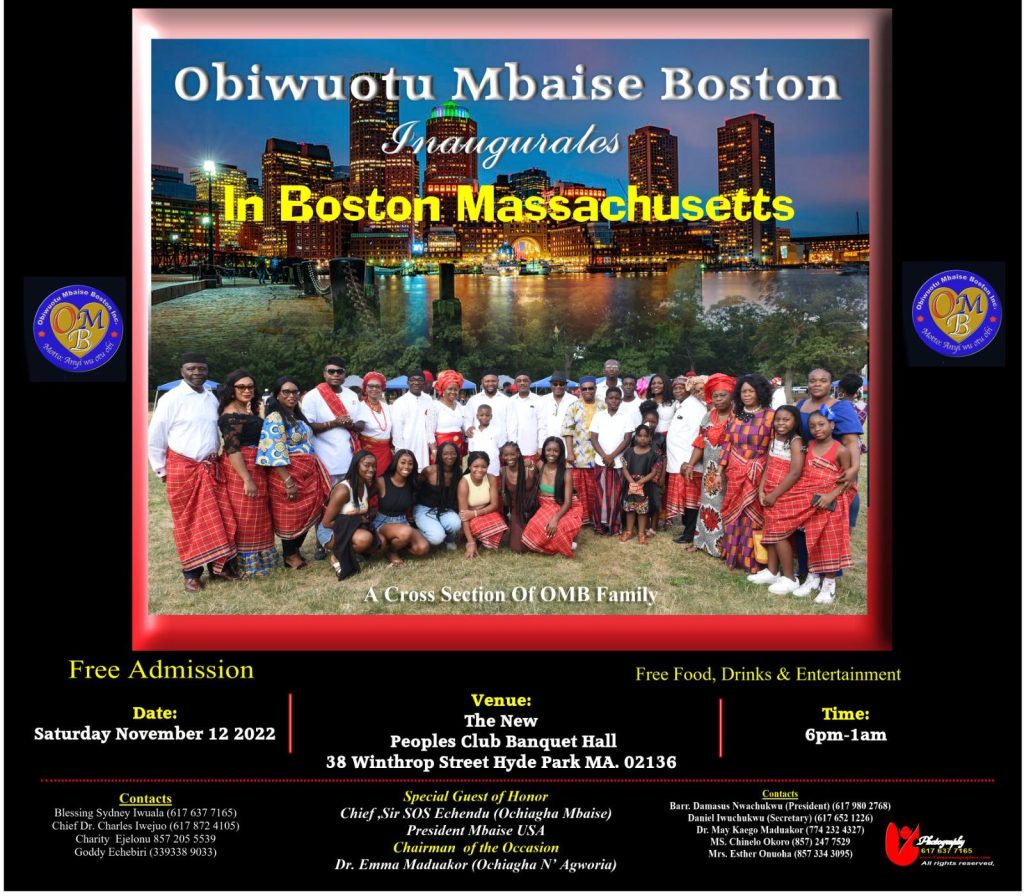
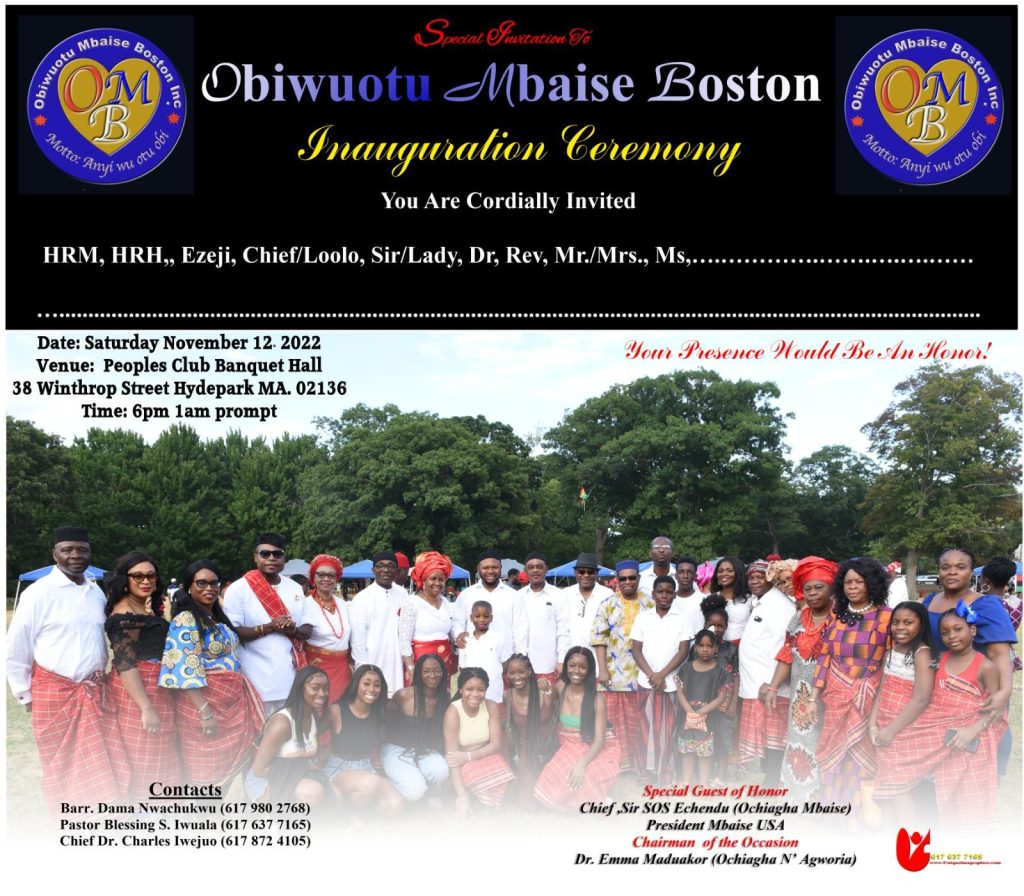
Within this backdrop, Obiwuotu Mbaise, Boston was conceived: as a response to the need for a dedicated organisation in the Boston region that would unify Mbaise/Igbo-heritage individuals, preserve cultural identity, support educational and social advancement, and serve as a bridge between the diaspora and the homeland.
Over time, what began perhaps as informal gatherings—family meetings, cultural nights, visits home—coalesced into a formal nonprofit organisation. That formalisation allowed us to structure our activities, expand our reach, and engage in serious community and charitable work.
Growth and Contemporary Impact
Today, Obiwuotu Mbaise, Boston stands as a vibrant, action-oriented association. We celebrate our culture, empower our youth, support one another’s professional journeys, and reach back to Mbaise with philanthropy, development outreach and cultural exchange.
In doing so, we shape a legacy of connection—between homeland and diaspora, between tradition and modernity, between faith, culture and service.
Why “Obiwuotu”?
The name “Obiwuotu” carries the nuance of home, heart, gathering—and it embodies our conviction that wherever we are in the world, our roots in Mbaise, our Igbo identity, and our communal responsibility remain real and present. It affirms that we are not just an association, but a home for the Mbaise-Igbo spirit in Boston.
Key Milestones (Suggested for website timeline)
1900s and earlier: Mbaise region develops rich cultural traditions; clan societies and agricultural economy predominate.
1941: Formal adoption of the name Mbaise to unite five clans under colonial administration.
Late 20th century: Streams of migration from Mbaise/Igbo lands to the U.S. including New England region.
Early 2000s: Informal gatherings of Mbaise/Igbo families in Boston begin cultural and support-forums.
Founding Year of Obiwuotu Mbaise, Boston (you can insert your actual founding year) – organisation formalised as non-profit, mission defined.
Present: Active programming in Boston, educational support, cultural festivals, philanthropic linkage to Mbaise and strong diaspora network.